Sunday, July 21, 2013

ROC: Honda-Ya - As If It Were a Direct Transplant from Japan

I've been meaning to write this review for a while but now finally got the chance to. Honda-Ya is an amazing institution over LA County and OC as they have locations throughout those counties. Why is that so? They have pretty much introduced Southern California to Izakayas which are essentially Japanese pubs. Although there are plenty of types of Izakayas in Tokyo where they range from traditional to "modern" themes as I've actually been to a pirate-themed one and my first one being a mizugi bar (lit. swimsuit bar) where female waitresses dress in very skimpy outfits and serve food of a typical izakaya, Honda-Ya seems to have managed to recreate the traditional izakaya here in SoCal with its various food offerings and atmosphere as they have wooden bar tables, tatami mats with cushions to sit on without shoes and plenty of uniquely Japanese decorations inside the restaurant.

They have a large menu filled from the range of traditional Japanese offerings as takoyaki, sashimi, and tempura to more fusion with carpaccio and Americanized rolls. In addition, they have various seasonal specials regarding food items and a great drink list composing of beer, sake, shochu and of course chu-hai (refreshing shochu-based cocktails mixed with soda water and a choice from a variety of flavoring syrups). Chu-hai in my opinion is the drink to mainly get at an izakaya as it's uniquely associated with it and a huge part of the izakaya culture.

The location I'm covering for this blog post is the one in Tustin, CA. With hours ranging from 5:30 to 1AM (kitchen closes around 12:30am), there is usually a line throughout as not only is it a dinner spot but primarily is viewed as an amazing place for late night dining. Besides the late hours, what really makes it special for late night grub is that their menu mainly comprises of many small dishes to share. The following are photos spread out from two visits: one from sitting at the wooden bar and one with a friend sitting at the tatami mat area.  I do apologize for the poor picture quality as the setting composed of dim lighting during both visits.


When you first sit down, they offer you complementary cucumbers marinated in brine but aren't exactly fully pickled as with typical pickles here in the US. With the refreshing taste from the cucumber and the tang from the brine, it's sure delicious to nibble on before taking on their many dishes. I also went for a double Lychee Chu-hai as I wanted something to quench my thirst that's very refreshing. It definitely has that sweet lychee flavor but another chu-hai that I do recommend that's equally refreshing but more on a sour note is their Yuzu (Japanese Lemon) Chu-hai.


Definitely a great starter is simple Tuna Sashimi. Granted, it may not be as finely cut as by a sushi chef. However, elegance isn't really expected at an izakaya. Be that as it may, the tuna tasted clean and delicious. Sitting on the tatami mat, having tuna sashimi with sake is a great way to enlighten the experience.


My friend was really hungry so he got the sashimi bowl for himself. Looking at the picture, it appears it contains tuna, salmon, hamachi, red snapper, ikura, and a shrimp along with a square of nori. He said it was pretty good.


 He then ordered the White Peach Chu-hai. I've had this before and like others, very delicious. Not only is it sweet but there's a slight tang from the white peach flavoring as well.


My Green Apple Chu-hai came as well. Out of all the chu-hai flavors, this easily lands on my top three as not only is it refreshing but it has the flavor of apple Jolly Ranchers.


Along with the drinks, the rest of the dishes came together. In my opinion, the dish you absolutely have to get is their Crab Shumai. Even though I wasn't sure if the crab was imitation or not, it was loaded with it which makes it very delicious and loaded with shellfish flavor. The spicy Chinese mustard on the side is an amazing complement to the shumai as I feel that it doesn't really need any soy sauce to go with it.


Another must order dish is their Takoyaki. Cooked in a batter, it's loaded with octopus pieces and topped with bonito flakes, seaweed flakes, and an okonomiyaki sauce. On the side came condiments of Japanese and ginger to go along with the pieces. Soft on the inside from the batter and chewy from the octopus pieces, it was loaded with savory, umami flavor.


The Seafood Tempura definitely is something to order when wanting to get a variety from Honda-Ya's menu. It contains tempura of shrimp, squid, whitefish and a shiso leaf. It came with a dashi-loaded tempura sauce. Even though it was delicious, I wish that Honda-Ya would also offer it with some grated radish to go with the sauce as to provide a refreshing acidic contrast to the fried, yet delicate batter of the tempura.


Although the following diverges from the sushi I usually eat, this is one of those very few exceptions where I venture into the darkness of American-style sushi. This is their Blue Crab Hand Roll in soy paper. It also has an avocado slice in there as well. I have to say that this was alright for what it is.


The following pics are from my other time I sat at the bar. This is their Monkfish Liver (Ankmo). It came with the standard garnishes of mentaiko, green onion and ponzu. The flavors of the Ankimo were very creamy and, no doubt, very delicious especially with the citric ponzu and the garnishes bringing a refreshing counterbalance.


Not sure of the exact kind of oysters that were given, they had the same ponzu and garnishes as with the ankimo with the addition of a lemon wedge even though I felt it wasn't needed with the ponzu already being citrus-based. These oysters were fresh of course. Most likely because I grew up eating oysters of this style, I prefer the Japanese preparation of raw oysters with ponzu and the garnishes of green onion and mentaiko vs. the French version with the mignonette as the ponzu incorporates strong umami flavors that go extremely well with seafood while maintaining a harmony with the acidity from the yuzu juice component.
 

This is Ginza no Suzume, a shochu made from barley, on the rocks. I highly enjoy drinking shochu as is on the rocks. Although only about half the alcohol concentration of vodka, I feel that shochu tastes more refined and indeed it's smooth, especially with Ginza no Suzume. Rather than drinking it straight as I find it rather unpleasant, the water from the melting ice opens the true flavors of the shochu while essentially diluting out the unpleasantness.
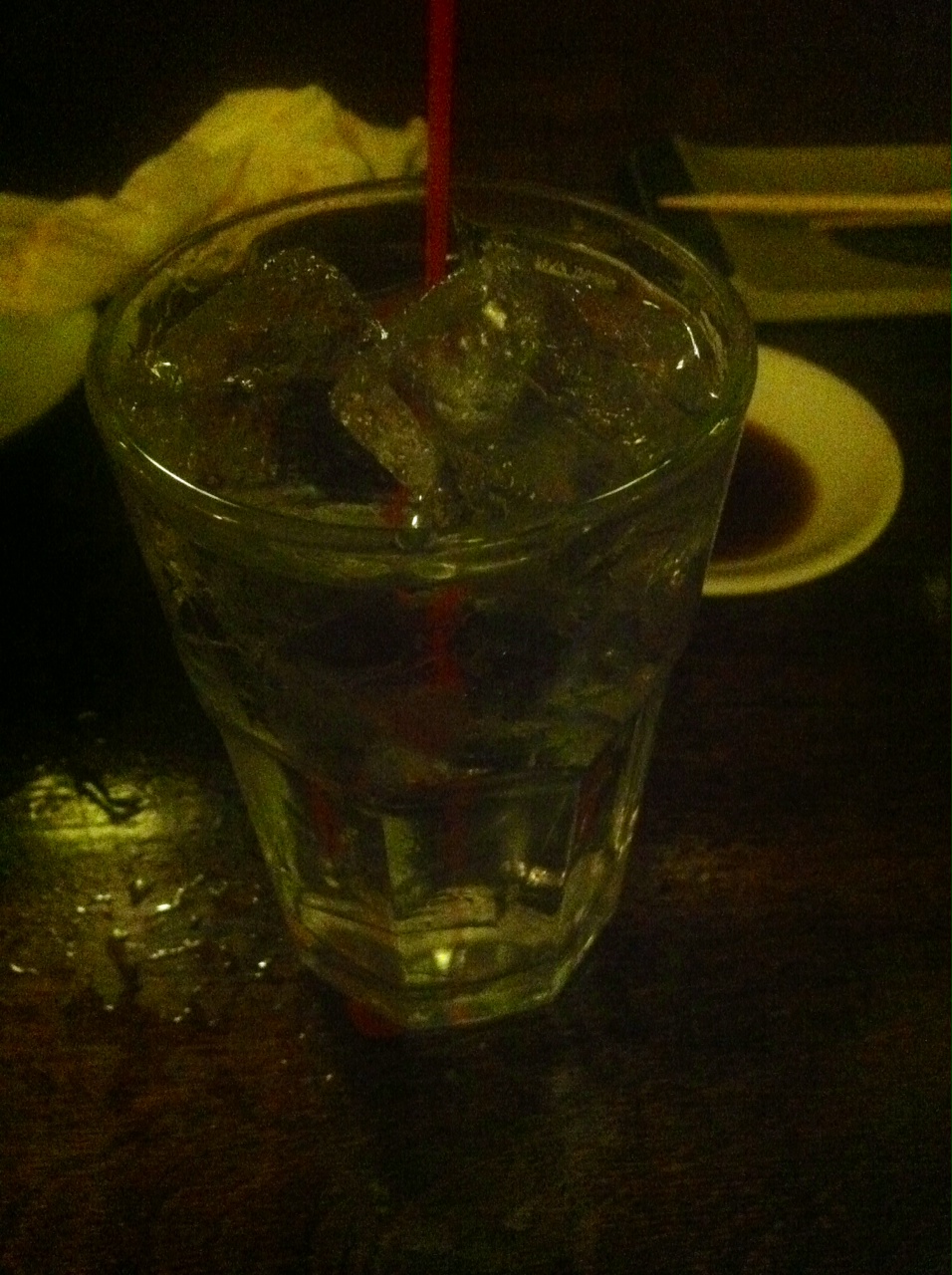

Afterwards, I also got a Kyoho Grape Chu-hai. While much lighter and refreshing and it'll give you a buzz, it has the flavor of artificial grape soda. I'm not implying that the artificial flavor isn't inherently bad, just like I prefer that unique, artificial green apple flavor to that of real apples. 


Honda-Ya also has an extensive yakitori list as the have the charcoal grill in the back. Yes, the yakitori's good. However, I prefer Takaya Yakitori Izakaya or Shinsengumi when I go out to eat primarily yakitori. The following is chicken skin with salt and chicken thigh with green onion and sauced with tare. I wished that the chicken skin was cooked a little more as it was soft in the center in which I find to be a bit of a turn off as a huge portion of it was all bunched up. Be that as it may, the chicken thigh was delicious while having a good amount of tare.


Even though I prefer the other previously mentioned places for yakitori, Honda-Ya definitely beats them in regards to shrimp. Not only is the shrimp properly cooked with the right amount of crisp and char, the cook also manages to retain its moisture. This is their spicy jumbo shrimp. It can be eaten with the shell but after a bite, I ended peeling it off while mopping up the tail with the sauce on the place. Not only was the tail delicious and moist, I ended up sucking the head as it has all of that goodness from the guts and organs. I know, that doesn't sound exactly appealing as almost all of the organs with crustaceans like shrimp are located in the head.


Once again, I would like to apologize for the lack of lighting in the pics. Honda-Ya is an amazing and fun place to grab a couple of drinks and order a fair quantity of small dishes. It's a great divergence from the typical chain restaurants with their happy hour specials while also serving as an after dinner/ late night place for food and drinks. Even though it may be unusual for some, I would definitely recommend sittingat the tatami mat area as it's a unique and fun experience even though it might require more waiting. Once you sit down, have a couple of chu-hais, and nibble on some small plates; you'll feel that you've transported into an izakaya in Japan.

Monday, July 15, 2013

Sushi Gen: The Best Sushi in Little Tokyo (a.k.a. The Non-$15 Sashimi Platter Blogpost)

Sushi Gen is a landmark institution in Los Angeles as it has been around since the '80s. I can imagine it was one of the first sushi restaurants here in the US. Even after all of this time, it still not only retains its glory but also manages to introduce people towards more traditional preparations of sushi. Yes, lots of people rave about their $15 Sashimi platter ($15 during lunch, $26 during dinner) and of course it's of amazing value regarding both quality and quantity. However, not only are the people who typically go for the platter missing out on the sushi bar experience as the platters are only available for table dining, they are also missing out on the variety offered a-la-carte and served immediately by order from the sushi bar. In addition to the variety and even though sashimi's also served at the bar, people are also missing out on what Sushi Gen truly shines and excels in: actual sushi, of course, with the vinegared rice!

The moment you see the restaurant from outside, you'll notice plenty of people waiting to get a table inside as they are most likely going for the sashimi platter. However, if you decide to opt for the a-la-carte only sushi bar in which you should do so if you want the best food and experience, wait time drastically shortens or even one would be seated immediately like we were. Once seated at the sushi bar, the sushi chef immediately greets you and instructs that you order verbally a couple of orders at a time. Immediately at this point, my recommendation is to ask for the sushi list that's typically given to tables who want to order sushi a-la-carte in order to know fully what they offer. Typically in Japan as it's the same ordering method as Sushi Gen unless if one is ordering omakase at a high-end institution in Ginza, one tells the sushi chef an order or two at a time and figures out what to order by simply looking at what's inside the sushi bar refrigerator for an item's availability. This too is expected for diners at the sushi bar. However, their bar is too long to see everything they have which is why I highly recommend requesting for the list.

As I typically like to stick to tradition when dining at the sushi bar, I had ordered my sushi progressively from lightest to heaviest in terms of flavor. I started out with Japanese Snapper (Tai). The sushi was seasoned with both yuzu juice for refreshing acidity and yuzu-kosho (fermented yuzu) to provide salt and a deep-flavor contrast with the fish. With both of these seasonings contributing to the Japanese Snapper's flavors, this was a great way to start the meal along with the freshness of the fish and the skin being left on the side in order to provide a textural contrast.


Wanting another fish of the lighter flavors yet something different from the Japanese Snapper, Engawa (Halibut Fin Meat) came next. As it's a bit chewier than Hirame (meat from the main body of the halibut) along with having its clean, light flavors, the Engawa was very delicious as it too was seasoned with yuzu juice and yuzu-kosho for the same reasons as the previous Tai.


Garnished instead with chopped shallots, green onion, ground ginger, and seasoned with ponzu (soy sauce seasoned with yuzu juice); the Spanish Mackerel (Aji) was served to us. The garnishes and the ponzu provide a refreshing contrast to the strong flavors of the mackerel along with the ponzu providing an umami flavor. In addition, one can tell that the seasonings and garnishes for the Aji are there to uplift its flavors instead of masking its "fishiness" in which there really wasn't much of by the fish itself. This was a surprise favorite for everyone in my dining party as Aji isn't typically ordered as frequent in the States which of course is unfortunate as it's a traditional sushi topping in Japan.


Next came Kohada (Gizzard Shad) which is, like Aji, one of the sushi toppings that isn't much ordered in the US yet it is standard in Japan. The flavors of the fish, like as of expected in makerel, were very strong, borderlined to being a bit "too fishy" even though it was still very delicious. It was fortunate that the lone topping of yuzu-kosho was there providing a different, strong flavor to complement the fish along with the vinagered rice providing refreshing acidity. It was these two components in which I felt saved it.


The progression now focused on fish with more deeper, meatier, and even perhaps buttery flavors. Yellowfin Tuna (Hamachi) came up. Even though I usually don't go for Hamachi, this was surprisingly very delicious as the fat content of the fish provided a nice buttery flavor without it being overwhelming. The freshness of the fish certainly helped as well. As the Hamachi wasn't seasoned at all like the previous sushi, the fish of this heavier class now requires the diner to dip the fish (not the rice) into the soy sauce. As wasabi is already added to the majority of sushi ordered, no additional wasabi's needed to be added or to be mixed into the soy sauce which is actually a sushi faux-pas. The slight dip of the fish in the soy sauce provided a strong, salty, umami flavor that went well together with the butteriness of the Hamachi.


Next came the most standard out of all the sushi, Lean Bluefin Tuna (Akami). Not only is the tuna of high quality and very fresh, it's meaty, savory flavors were very much appreciated.


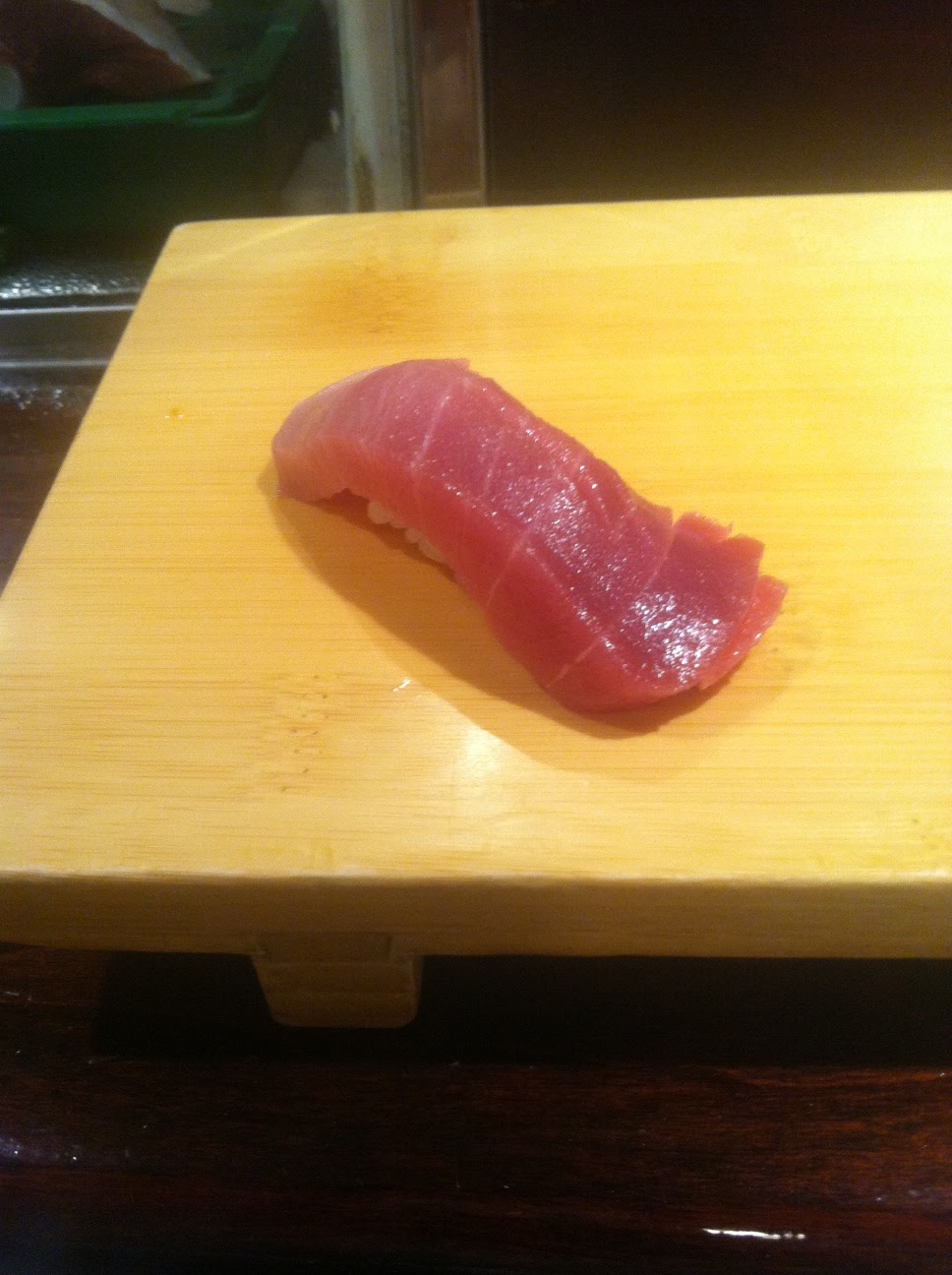
Now, I present to you what are the most amazing, lip-drooling items at Sushi Gen: Chu-Toro (Medium Fatty Tuna on the left) and the grandest of all, O-Toro (Very Fatty Tuna on the right). First, lets start off with Chu-toro. It was quite evenly marbled which is what makes Chu-Toro what it is: an amazing blend of the fatty and the meaty, leaner flavors combined together in order to make its own unique character. Next, words can only mention so much of the grandeur lavishness of O-Toro. The distinct fatty segments of the tuna belly is what overrides the senses and makes those sensitive to fat extremely squeamish just by looking at it. This of course was extremely luscious in both flavor and texture. Only a small dip of soy sauce is required in order to fully bring out the breathtaking flavors of both Chu-Toro and O-Toro. As the chef was willing to give a piece each of Chu-Toro and O-Toro as it's two pieces per order, I was fortunate enough to taste both of them. But then again, who am I kidding? I'm going for the all out lusciousness of O-Toro only when I come back next time!


The next best thing came next: Sea Urchin (Uni) from Santa Barbara served as a gunkan-maki (battleship roll).  Unlike Ikko in Orange County where they serve some of the best Uni, this isn't preseasoned in which at times I prefer it just as is with only a small dip in the soy sauce for seasoning so that I can taste and appreciate the full, distinct yet very clean flavors of fresh Uni. The texture of the uni was firm, not at all watery which also contributed to its extreme deliciousness.


To complete the almighty sushi trinity with O-Toro and Uni being the other two components, raw Sweet Shrimp (Amaebi) was then presented freshly before us with their heads being simmered into miso soup to be served later on. Not only was it not at all slimy as one might perceive it to be, the meat was very firm in texture and of course was very sweet in flavor as it should live up to its name.


One of my personal favorites, Ikura (Seasoned Salmon Roe) came next served as a gunkan-maki like the Uni. The eggs were very fresh as determined from its non-wrinkly, springy, firm texture. I swear, some people get weirded out from the sight of roe as they make a mental connotation of fish eggs with something icky. However, they shouldn't do so as people see caviar from sturgeon as luxurious yet not so much with Ikura as it's from Salmon. Be that as it may, the Ikura had a very deep savory flavor which only required a small dip of soy sauce in order to bring out fully its flavors as the roe was of course high in salt content yet not overwhelmingly salty.


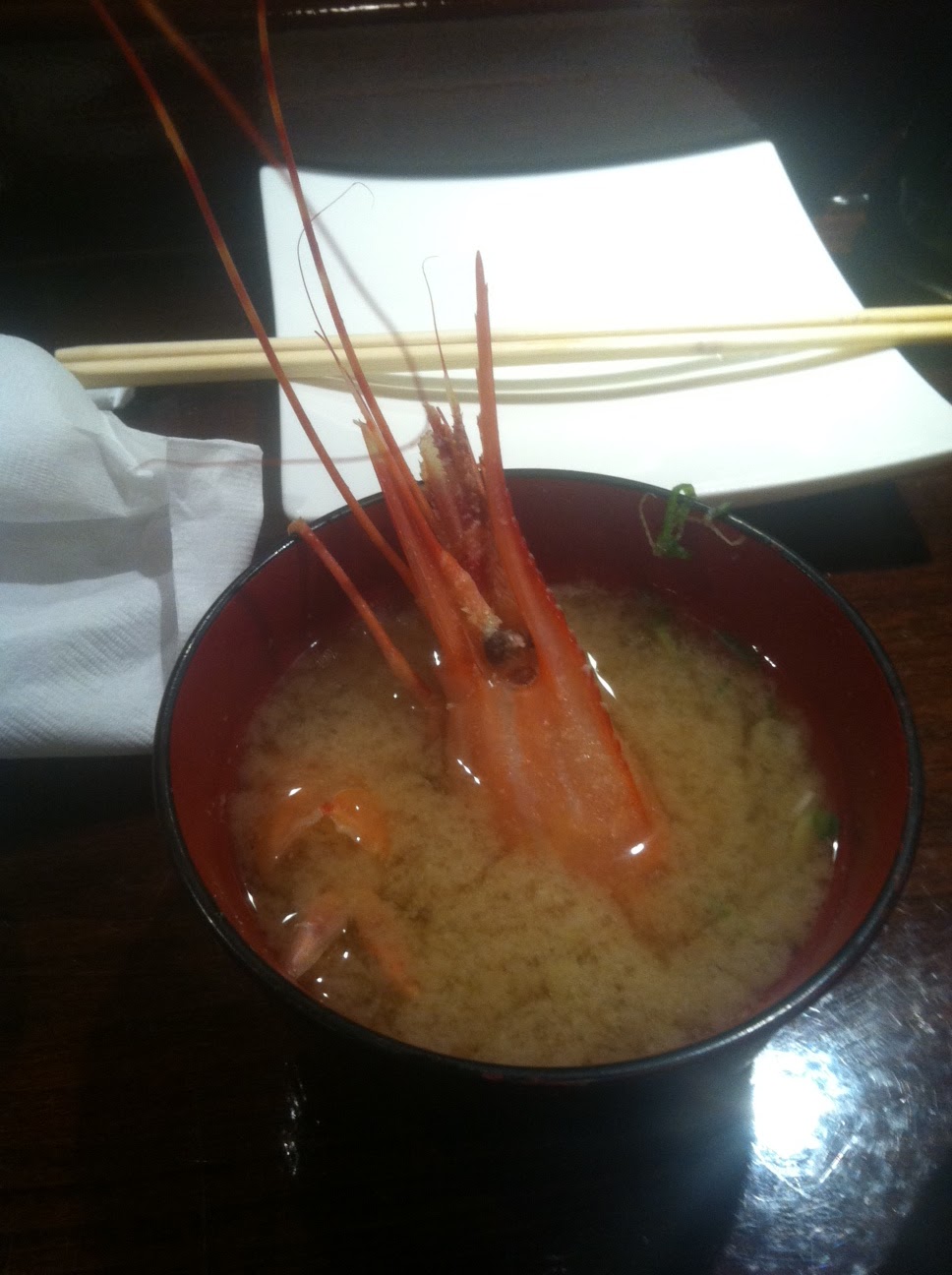
Our miso soup with the head from the Amaebi simmered in came. It definitely was a delicious way to wash down all the sushi consumed. The head was loaded with meat which made it great to nibble on while slurping down the soup. However, one more sushi remained before the meal was concluded.


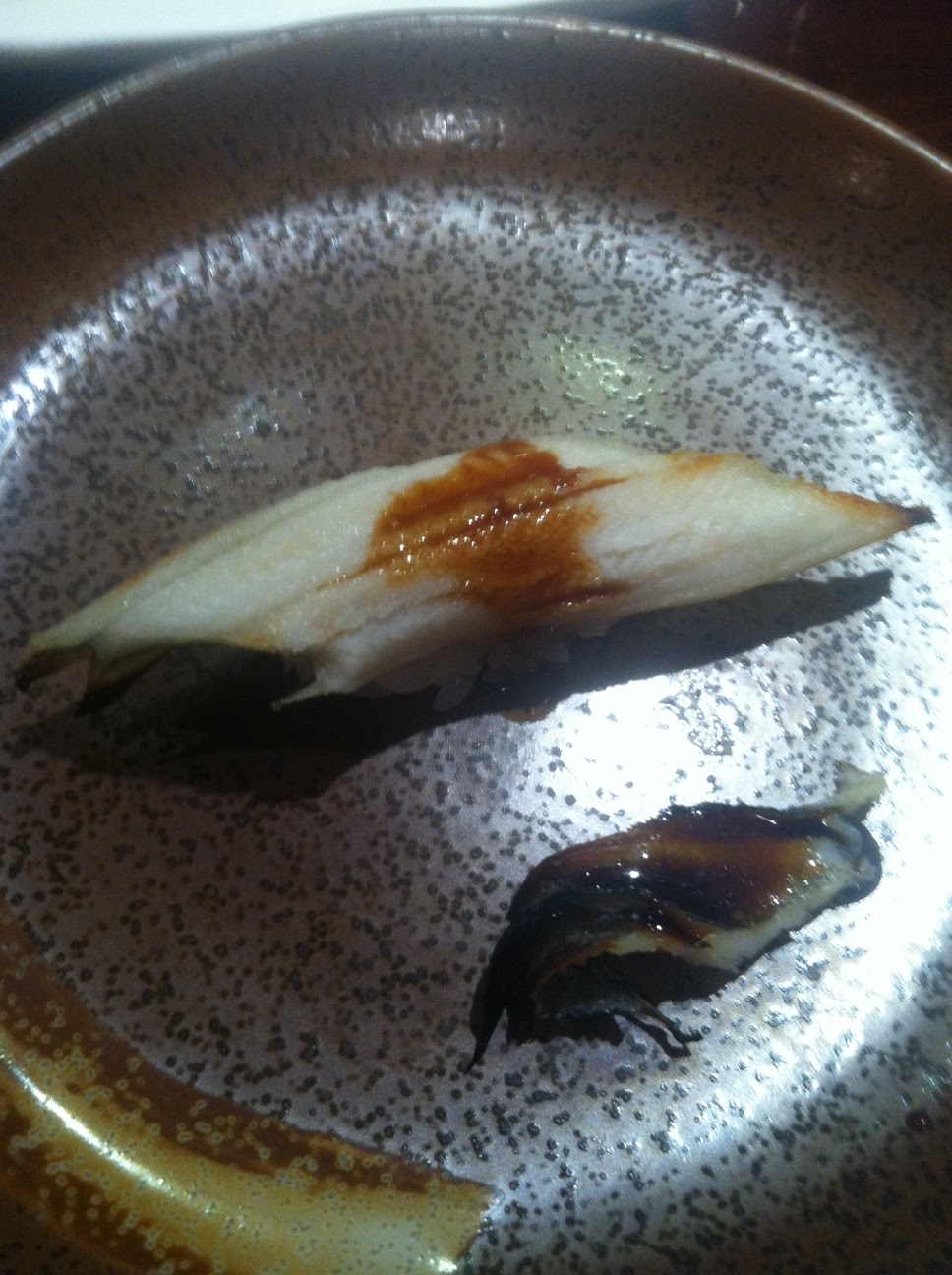
Finally, the last pieces of sushi that was serve was Conger/Seawater Eel (Anago). My cousin who dined with me was curious about it in the beginning as he wanted to know the differece between it and its freshwater counterpart, Unagi. Anago is definitely more meaty, savory and fish-like in flavor versus the much sweeter Unagi which is why I prefer Anago over Unagi. My cousin too felt the same way the moment he started to savor it. The Anago served at Sushi Gen has the right amount of sweetness from the sauce and its meat was very savory and firm. The combination of the two opposite characters create a harmonious flavor. If you're ever in a bind to decide which of the two eels you should order, I would definitely recommend choosing Anago over Unagi.


After finishing the rest of the miso soup, out meal was concluded. All of the sushi were extremely fresh and tasted amazing. Because of how consistent Sushi Gen is able to maintain its high standards of quality and preparation for decades while offering more traditional sushi toppings, that is what makes Sushi Gen the best sushi restaurant in Little Tokyo, if not Los Angeles. If you have only one night to eat sushi in LA, this is the restaurant to go to. Forget the $15 sashimi platter, go for the full experience and to expand your horizons by dining at the sushi bar.


Sushi Gen on Urbanspoon

Sunday, June 30, 2013

ROC: Nana-San (2nd Post) - The Amazing Sushi Restaurant with a Bipolar Personality

Nana-San is certainly one of my top favorite sushi restaurants in Orange County. They serve sushi using some of the freshest fish they can get their hands on. In addition to my amazement, they serve fish out of seasonality such as Katsuo (Bonito/Skipjack Tuna) during times other than their peak season of summer yet it still tastes as if it were. Be that as it may, they certainly like to stick with the seasonality of ingredients in general as they are able to bring in some of the "more Japanese" ingredients that some Americans would find quite bizzare such as Shirako (labled as "cod milt" which is the cod sperm sac that Anthony Bourdain raves about, including me). It certainly, in terms of deliciousness and quality, contends well with the other great, yet stylistically different sushi restaurants in Orange County such as Ohshima and Ikko (my personal favorite) as both of these restaurants serve all of their sushi completely seasoned as if it were in the manner of the traditional Edo-mae style. In addition, the sushi at Nana-San can be either dipped in soy sauce or served seasoned by the chef either with yuzu juice or ponzu which I highly admire Nana-San for doing so as I love acidity in food.

However, if there's one thing I've noticed that's fundamentally unlike the other two previously mentioned places, they actually also cater to those that only prefer the "rolls"; essentially for those completely new to sushi and/or just not the adventurous types when it comes to food in general: the picky eaters. Because of how Nana-San caters extremely well to both opposing types of eaters, for those those that are picky for not wanting anything too unusual or foreign in their mouths, and for those with discerning palates only wanting the most authentic, the most exciting, and the highest quality of both ingredient and preparation such as myself; the restaurant itself has quite the bipolar personality (I mean that figuratively of course unlike the actual, medical definition of bipolar disorder involving manic/depressive episodes). Of course, I do eat the Americanized sushi rolls from time to time. However in my perspective, the situation where I do such a thing is more like a tweaker who's either broke on cash or had his local lab raided by the DEA who can then only get his hands on the cheaper meth made in Mexico. Aside from that, when you enter into the restaurant, you can see the visible schism, a deep divide between those at the tables who typically go for the rolls and committing various sushi restaurant faux pas such as rubbing chopsticks and mixing wasabi into the soy sauce, and those dining at the sushi bar wanting both the traditional, unique dining experience and the most authentic items on the menus only native in Japan. By the way, the author of this post knows quite well that he's being over the top with his examples and similes.

For this trip to Nana-San, I've taken a friend who too is a big fan of Ikko and wanting authentic sushi. As we both wanted an authentic experience and it was out of all days and times of the week: a Friday night, we ended up waiting for more than an hour just to dine at the sushi bar. After the wait and both of us being extremely hungry especially with me not eating anything all day, I definitely would say that the wait was worth it. After ordering some beer and sake, I accustomed my friend that when dining at the sushi bar at Nana-San, one would verbally let the chef in front, as they are three of them, know what he or she wants a couple individual sushi orders at a time just like some of the more much casual sushi restaurants in Japan. Also, the sushi that were already seasoned by chef will be given to the customer in their own plates whereas the sushi that needs a dip in the container of soy sauce will be placed on the wooden geta (sushi tray).

The first two sushi pieces were the Red Snapper (Tai) and the Halibut (Hirame). Although initially asked by the chef if we wanted them to be garnished with jalapenos, we went for the more traditional garnish of only yuzu juice.  As both of these fishes are lighter in character, the acidity from the yuzu carries out their delicate flavors. While the red snapper was much more softer, the halibut was firmer in texture which gave it more solidarity within its flavor which gives itself more tolerance when garnishes are applied.


Next came Chutoro: although not as marbled as Otoro, the chutoro that was provided was of a near optimal ratio for those that want more of a meat flavor as with Akami but also wants some of the butteriness from the fat as well. This of course needed to be dipped in soy.


 The Kanpachi that came was topped with yuzo-kosho (fermented yuzu). Along with the yuzu-kosho providing both an acidic and salty contrast to the fish, the Kanpachi had a flavor that was crossed between the delicate flavors of red snapper and the buttery, fat content of hamachi which is why the yuzu-kosho worked so well with the fish, even without the soy sauce.


Taking a break from the sushi course, I ordered the Monkfish Liver (Ankimo) appetizer. The garnishes of the refreshing green onions, daikon, ponzu, kelp & watercress along with the saltiness of cod roe (tarako) went will with the distinct, buttery flavors of the cooked monkfish liver. Granted, this is definitely for those who are adventurous as the flavor of Ankimo is a taste that needs to be acquired.


Although Spanish Mackerel (Aji) is known to be quite fishy in flavor, especially the standard Mackerel (Saba); if bought from a proper source, there will be minimal of that unpleasant taste we associate mackerel with. That certainly was the case at Nana-San. Even though the green onion, ground ginger and ponzu masks out the slight fishiness, the garnishes really bring out the distinct flavor sushi traditionalists love in Aji.


Bonito (Katsuo) is something that Nana-San is able to bring year around even though the fish's peak season is summer. The sear of the fish gives it its pungent smoky flavor along with the garnishes of green onion, ground ginger and ponzu contributing to the polar opposite of acidity and freshness from the vegetables.

We then ordered the Live Sweet Shrimp (Amaebi). It was served with its head taken off right before us in ordered to be served with miso soup later on instead of as fried. Even though with most places amaebi would be dipped in soy, it was served with a lemon wedge. With the simple seasoning of lemon juice, it was able to bring out the delicate flavors of the amaebi as soy sauce wasn't necessary.


In a mood for some fish roe, Flying Fish Roe (Tobiko) was served as a gunkan maki. With a little dab into the container of soy sauce, the simple components of roe, sushi rice and nori together make it a fantastic combination as the Tobiko was fresh.


Next came the roe with more deeper, intense flavors: Salmon Roe (Ikura). Even though I had enjoyed recently for many years, it only occurred to me that it was actually marinated in mirin an sake a couple years back when that No Reservations episode of Hokkaido aired. The flavors of the Ikura were luscious as the texture of each single egg were consistent with freshness as they were all plump not wrinkly as with ikura way past its prime.


Nearing the end of the sushi meal, Conger (Sea) Eel (Anago) was served with a slight brushing of a strong, heavily reduced tare; not your typical, very sweet eel sauce used for Freshwater Eel (Unagi). Not only were the savory flavors of the eel brought out from its broil were very delicious, its texture was firm yet moist signifying its freshness.


Our miso soup with the head from the Amaebi we had previously enjoyed boiled together was served before us which is a great way to conclude a sushi meal. In Asian food culture, soup is usually served at the end as its savory, umami loaded flavors is a great way to wash down a meal and to aid in digestion. The flavors from the head melded well with the umami of the well made miso soup. This isn't your run of the mill, instant kind right from the packet.  After slurping all of the soup from the bowl, not with a spoon,  we both went in for the good parts of the "head" which actually is its body as the tail is pretty much its legs. Along with all of its the yummy, gooey parts, there was definitely a fair amount of meat inside which was of course very delicious as it was not over boiled.


I know I went on a tirade regarding American-style rolls. However in my defense for the following spicy crab hand roll, this is certainly, at best, borderline as not an overwhelming amount of Japanese mayo was used to make the crab mixture. Granted, this wouldn't be considered traditional but the crab hand roll is already present at some of the traditional style sushi restaurants over here; not sure about Japan as it's highly doubtful. As I just mentioned that there wasn't an overwhelming amount of mayo, it was actually pretty good for a guy who primarily goes for the traditional when it comes to sushi. I'd imagine they had used Sriracha as its spice component.


As it's standard for Nana-San to give a complementary dessert at the end, we were given a citrus gelatin (assuming the citrus was orange) as a literally sweet way to end a sushi meal loaded with umami flavors. Like with most Asian desserts, it was not overwhelmingly sweet to which I highly admired. In addition, the springy texture of the gelatin was too appreciated as the lightness of both its flavor and texture was a great way to end the meal.


If you want more of a casual setting in both sushi style and dining environment while also wanting the freshest fish and the kinds that are primarily enjoyed by sushi traditionalists in Japan, Nana-San should definitely be in your consideration. While they do serve American-style rolls, it's because of Nana-San's more traditional offerings, like with Ikko and Ohshima, that its strong presence offsets the notion of not being able to get traditional sushi here in Orange County as it's already loaded with sushi restaurants primarily serving "rolls" such as a spicy tuna roll, caterpillar roll or a "banzai" (insert any Japanese word) roll.

Nana San on Urbanspoon

Monday, June 10, 2013

ROC: East Borough - Refined Vietnamese Classics

Recently, my mother came over for a visit and I wanted to take her out to a nice brunch place in Costa Mesa as that's where the great brunch spots are in my opinion. Finally finding a parking spot in The Camp shopping plaza where it's generally difficult to even park your motorcycle, not only did we walk over to the Old Vine Cafe, but it was packed with what I had assumed meant an hour wait time for us. So, we took a walk around the place to see if there was any other great, interesting places to eat. What stood out out was East Borough with it's open air space and its imaginative use of the elements of nature as its decor such as plants that blend well with the restaurant's surroundings and a serene waterfall that provides a relaxing atmosphere to the diners.

East Borough serves refined versions of Vietnamese classics such as banh mis, spring rolls and rice dishes. They use quality ingredients for the food that they bring out. Some say that they're more authentic, diverse options in cities like Westminster or Garden Grove and yes I would agree that. However, they also say, especially on some of the Yelp reviews, that the food at East Borough is gentrified (even more so when one ties the name of the place to Brooklyn and Queens) to meet the tastes of "hipsters" making it automatically unauthentic. Well for starters, I wouldn't recommend hating on hipsters as not only is it passé, but people should realize, including myself a couple years back, that they are the refreshing, polar opposite replacement of the xenophobic, homophobic, anti-nerd/tech generation from the previous decade. Be that as it may, I would actually disagree with their food not being authentic as what I have seen and tasted before me were those same flavors their food pays homage to. Not only that, those flavors were also heightened with the help of the high quality ingredients they use which is the only thing I find that differs from some of the shops that originally serve this kind of food; no wacky ingredients.

What I ordered was their Bo Kho Beef Stew Baguette. With the refreshing traditional garnishes for the Banh Mi and the savoriness of the beef stew along with chunks of potatoes and carrots, this delicious sandwich definitely stacks up against some of the other, more traditional establishments. Like with any sandwich, the bread has to be good without any exemptions. The baguette itself was nice, moist and flavorful especially with its chewy, not crunchy crust. Along with getting it as a 12" size, it came with an au jus-like dip which seemed accented with citrus that complemented well with the sandwich as both the sandwich and dip are both in character, savory and acidic.

My mom ordered their Grilled Pork Rice Dish. With all-natural pork (I assume no additives and antibiotic-free), picked radishes (daikon) and carrots, and their large-leaf watercress; it was really delicious especially with once again, better ingredients. It came with a fried eggroll and a citrus vinaigrette on the side. Unfortunately, I wasn't able to get a snap shot of the dish.

With food made from the high quality ingredients, East Borough is a must try for those that love Vietnamese food or for those that want to try it for the first time as it's an amazing cuisine that mixes light and refreshing flavors with savoriness. Along with using environmentally, biodegradable containers, they also deserve kudos for having curbside pickup available if you call them in advance as listed on their website, especially if you don't want to drive all the way out to Westminster/Garden Grove for some banh mi. In addition to providing a calm, natural atmosphere for the diners, they have wonderful, charming servers which adds more pleasantry to East Borough.

East Borough on Urbanspoon

Saturday, June 8, 2013

ROC: Houston's (2nd Review) - Fine American Simplicity

After many times of wanting to eat foods that diverge from the stereotypical American palate consisting of "meat and potatoes"; as snooty at that sounds, it made me want to go back to my roots in order to understand why people love wholesome, American cuisine. I used to think American food was quite boring, unimaginative, only frequented by those who really didn't give a rat's ass about how food can ignite passion; basically for people who didn't want to be offended by having something unusual and different in their mouths. No doubt, I love the eloquent, complex nature of French gastronomic masterpieces from wonder chefs like Joel Robuchon and Pierre Gagnaire which made me crave anything but simple. But then again, I love original, authentic preparations of Japanese sushi which doesn't require any modern complicated techniques such as sous-vide since sushi only requires the highest quality of ingredients and the refinement of the sushi chef's preparation. Its simplicity actually ignites complex sensory reactions. This very unique aspect of sushi sparked my interest in going to establishments that serve traditional American fare such as Houston's.

As I've said in my previous post of Houston's, they have a small, simple menu. However, they do it extremely well as they're able to make sure that they get ingredients of fine quality and serve it to you at an affordable price. Even though it's initially intimidating as you walk in through the door with their smart, classy decor; dim lighting and being surrounded by the extremely well-off patrons that frequent there; the hostess, servers and even the customer base are actually quite friendly and approachable. Because of how delicious the food is at Houston's, people want to go there in order to have an unpretentious, non-frivolous meal.

Where do I start? The dish that makes me keep coming back to Houston's is their Roasted Prime Rib.
This aged beauty is served on the bone, seasoned with the right amount of salt and pepper and accompanied by au jus and horseradish sauces. Served rare and as bloody as it is, it brings carnivorous excitement and pleasure once you chew into a savory piece before complementing it with the two sauces. Even if you're one of those people that believe a drop of sauce completely drowns out the flavors of the meat, the prime rib is still very delicious as the quality of the aged meat along with it being rightly seasoned gives it its impact. With the heaviness of the prime rib, along with having it during lunch as Houston's unfortunately does not offer its delicious Colcannon Mashed Potatoes at that time of the day, I went with their Tabbouleh with corn that serves as a refreshing counterbalance. Regardless of it being quite lighter with its herbs and lemon juice, the salad itself makes a bold stand next to the prime rib.


If you want beef other than the prime rib, Houston's offer steaks such as their Center-Cut Fillet of Beef Tenderloin. Simply grilled, seasoned, and topped off with what I assume was olive oil; this will appease the appetite of any steak lover. I had them cook it black and blue as I was in the mood for a steak in that masculine, under appreciated manner of meat preparation. Some might wonder if they'll get sick eating beef raw like that. However, I can assure you that I was totally fine afterwards as I can imagine that quality establishments like Houston's and high-end steakhouses buy high quality meats and store them in very proper refrigeration. Accompanying the fillet was their Maple-Glazed Carrots which also contained peas as well. They had the right amount of sweetness without it being overpowering as it complemented well with the vegetables. In addition, I enjoyed the dish with a nice glass of extremely peaty, smoky Laphroiag 10 yr Single-Malt Scotch which its peaty flavor is a unique character for such single malts from Islay. The peat and smoke of the Scotch went hand in hand with both the tenderloin and the carrots.


If you're not in the mood for red meat, Houston's also offers amazing fish as well such as their Loup de Mer (European Seabass). It had been under my radar for quite some time but I finally got around to ordering it and am glad for doing so. This delicate fish is grilled over hardwood and served with a generous heap of Marcona almonds and herbs such as parsley. The Loup de Mare was delicious as it was prepared with the right amount of seasonings and lemon juice while bringing out the flavors of the fish. In addition, the large amount of almonds and herbs complemented the fish well without their flavors overpowering it. As it was during dinner time, I had immediately ordered the dish with their Colcannon Mashed Potatoes (mashed potatoes mixed with cabbage). Topped with once again had assumed was olive oil and chopped parsley, this is a must order side that will complement well with almost any dish served at Houston's. However, midway through eating the fish while I was massively enjoying it along with my senses being dulled by the Lapthroaig 10 yr and a Manhattan made with Knob Creek Bourbon (I had mentioned in my previous Houston's post that their Manhattans are amazing), I had started to notice that there was too much char on the skin side of the fish which overpowered the flavors. With the fish being delicious and as it was engraved onto my psyche at a young age to clean my plate, I still finished the dish even though the server had told me that he was more than willing to get me another one if I hadn't done so. Be that as it may, I understand that it was one of those unfortunate, rare mishaps that I just had to push off so that it wouldn't ruin my future expectations of and visits to the restaurant.


If I could dine at Houston's weekly, I definitely would so without hesitation. Albeit being a chain, don't let that discourage you from trying out this fine American establishment as Houston's is one of the exceptions against the mediocrity of most chains in America. In addition to Houston's chain status, I want to tell you also not to put down their simple menu options like I had done in the past before dining here for the first time. Like I had mentioned previously, it's because of their limited menu options that Houston's can focus on serving you some of the finest dishes without sacrificing quality. Restaurants with too much on their menus will have much more upkeep and would not be as well capable of serving you a great dish versus restaurants with more simpler menus.

Link to my other blog, A Concierge for the Fellow Man, for an insight in regards to bringing a date:
Houston's - Irvine, CA: An Extremely Versatle Date Spot

Update 12/1/2013: Houston's now offers their Jumbo Lump Crab Cakes made with entirely out of Atlantic Blue Crab (no filler, except mayo as a binder) served with a mustard remoulade. Although I hear it is served standard on their menu at Gulfstream in Newport Beach, this is a seasonal offering at the Irvine Houston's. Not only are the crab cakes beautifully seasoned and cooked, the crab cakes are rich and loaded with flavor as the cake was asymptotically composed 100% of Atlantic Blue Crab. The tang from the mustard remoulade served as a nice counterbalance. The crab cakes may look small but they were actually a good size, especially considering the richness of the crab itself. Because of this, I kind of regret ordering the Colcannon Mashed Potatoes (don't get me wrong, I still love them) as I should have ordered the Tabbouleh instead as a refreshing side in order to counter the richness of the crab. The cherry tomato garnish served to be a palate cleanser, however. Be that as it may, the jumbo lump crab cakes are amazing and one of my favorite dishes I've had at Houston's as so far, this has been the best crab cake main entree I've ever had. Once again, be sure to try it at some point as this is a seasonal dish at this location.


Houston's on Urbanspoon